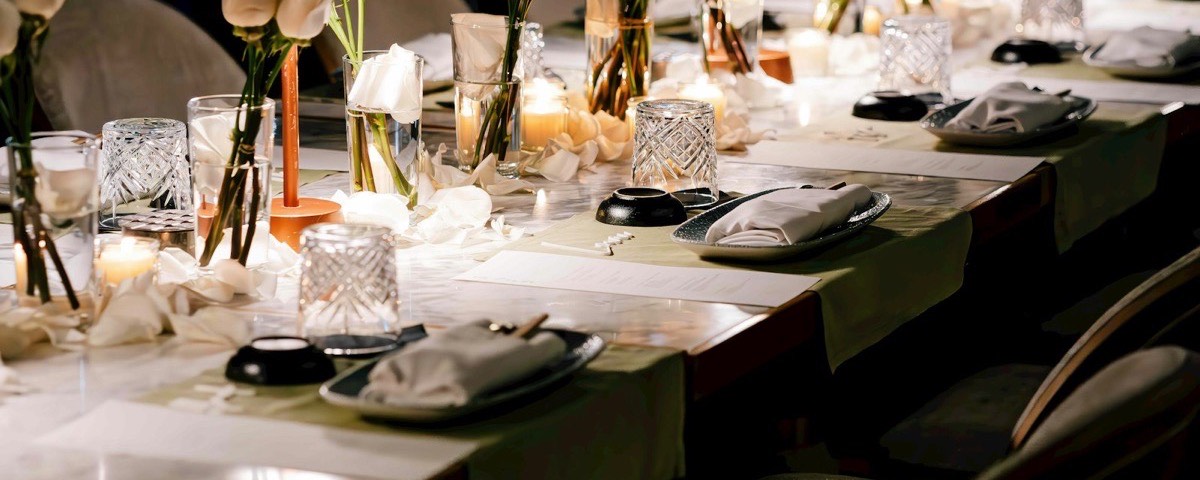
To host your first dinner party, invite four to six people, cook one make-ahead dish, and prep the day before. Here is the full first-timer playbook to follow.
To host your first dinner party well, keep it small and keep it simple: invite four to six people, cook one thing you can make ahead, get most of the prep done the day before, and give the conversation a nudge if it stalls. That is the entire job. First dinner parties go wrong when people invite too many, cook too much, and leave everything to the last hour. This playbook keeps you on the easy path.
No recipes here, just strategy: how many people, what kind of food, when to do what, where to seat everyone, and what to do if the room goes quiet. By the end you will know exactly how to run the night.
01How Many People Should I Invite to My First Dinner Party?
Four to six, including you. This is the sweet spot for a first-timer, and it is not arbitrary.
With four to six, one conversation can hold the whole table, so nobody is stranded. It fits a normal dining table and a normal set of plates, with no need to borrow chairs. And it is a manageable amount of food to cook without a second oven or a meltdown.
Resist the urge to invite more because you are worried about lulls. Bigger is harder, not safer. Eight guests means the table splinters into side conversations, doubles your cooking, and multiplies the odds someone feels left out. For your first one, six is plenty. You can scale up once you have the rhythm.
One more tip: mix people who know each other with one or two who do not, but make sure nobody arrives knowing nobody. Every guest should have at least one familiar face.
02What Do You Serve at a Dinner Party?
One main dish that mostly cooks itself, plus easy bookends. The golden rule for a first party is the one-pot logic: choose a main that sits happily in the oven or on the hob while you talk, rather than something you have to plate and time to the second.
Think in terms of strategy, not recipes:
Pick a make-ahead main. A stew, a curry, a traybake, a big pasta bake, a slow-roast. Anything that improves by sitting and does not need you standing at the stove while guests arrive.
Let the sides be lazy. Good bread, a big salad, rice, or roast potatoes. Nothing fiddly.
Buy the pudding. A good shop-bought dessert, or cheese and fruit, frees up an entire evening. Nobody minds.
Cook what you have cooked before. Your first party is not the night to test a new recipe. Make the thing you already know works.
Ask about dietary needs when you invite, not on the night. One veggie main that everyone can eat is often less stressful than juggling separate plates. And do not over-cater by tripling quantities; a bit extra is friendly, a mountain of leftovers is just stress you cooked yourself.
The best host is not the best cook. It is the one who is relaxed enough to enjoy their own party.
03Timing: When to Do What
Good timing is what lets you greet your first guest calm rather than frazzled. Work backwards from the arrival time.
The day before: shop, clean the room people will sit in and the bathroom, lay the table, chill the drinks. Aim to be roughly 80 percent done.
Afternoon of: cook the main to the point where it just needs finishing, prep the salad, sort glasses and serving dishes.
One hour before: stop cooking, tidy surfaces, put music on, get yourself ready. This buffer is non-negotiable; it is what stops the sweaty-doorbell moment.
As guests arrive: hand them a drink, take their coat, point them at the snacks. You should be free to talk, not stuck at the hob.
Serve the main a little later than you think, maybe an hour after the first person arrives, so people have time to settle and drink before they sit down. Hungry-but-relaxed is the target; starving is not.
04Seating: A Small Thing That Does a Lot
For four to six people you do not need place cards, but a gentle nudge helps. Steer couples to sit apart, put the two most talkative people at opposite ends so energy spreads, and seat anyone shy next to you or next to your warmest friend. If you have a natural connector, plant them in the middle where they can bridge both sides.
Round tables are easiest because everyone can see everyone. If yours is long, keep the group tight at one end rather than spread out, so it still feels like one conversation.
05What to Do When Conversation Stalls
Every dinner party has a lull. It is not a failure, it is a natural dip, usually as plates are cleared. The trick is to have a nudge ready rather than freezing.
Keep a few warm, open questions in your pocket and toss one to the whole table when the energy dips. Not an interrogation, just a spark. Our full bank of dinner party conversation starters is worth skimming before your guests arrive, so you are never caught short.
Easy openers as people sit down
How does everyone know each other?
What is the best meal you have had recently?
Anyone been anywhere good lately?
What have you been watching or reading that you would recommend?
Once the main is on the table
What is something you are weirdly good at?
What is a hobby you would pick up if time and money were no object?
Where is the best place you have ever travelled?
What did you almost do for a living, but did not?
Over pudding, when everyone is comfortable
What is the best decision you have made in the last few years?
What is something you have changed your mind about?
06How Do I Not Stress When Hosting?
The single biggest stress-killer is doing the prep the day before, so the day itself is calm. After that: lower the bar on purpose. Paper napkins are fine, one dish is fine, a bought pudding is fine. Decide in advance you will not apologise for anything, because every apology just makes guests reassure you instead of relaxing.
If the nerves run deeper than logistics, our guide to hosting anxiety unpacks why hosting feels so high-stakes and how to quiet it. And remember the real goal: your guests are not judging your cooking, they came to spend an evening with you. A relaxed host makes a relaxed room, and a relaxed room is the whole point.
07Not Ready to Host? Practise as a Guest First
If cooking for people still feels like a leap, there is a low-stakes way to get comfortable at a table of interesting people first. You can book a seat at a small group dinner on KF.Social, turn up as a guest, and watch how a good table flows, how people introduce themselves, how a lull recovers, all with zero responsibility. A small booking fee holds your seat and your food is paid at the restaurant. A few of those and hosting your own feels far less daunting.
Related Questions
How many people should I invite to my first dinner party?
Four to six people including yourself. That size fits a normal table, keeps one conversation going so nobody is stranded, and is a manageable amount to cook. Bigger is harder, not safer. Make sure every guest arrives knowing at least one other person.
What do you serve at a dinner party?
One make-ahead main that mostly cooks itself, like a stew, curry, traybake, or pasta bake, plus easy sides such as bread and salad, and a shop-bought pudding. Cook something you have made before. Never test a new recipe on guests.
How do I not stress when hosting?
Do most of the prep the day before so the day itself is calm, keep the food simple, and stop cooking an hour before guests arrive. Lower the bar on purpose and refuse to apologise for anything. A relaxed host makes a relaxed room.
When should I serve the main course?
About an hour after the first guest arrives, so people have time to settle and have a drink before sitting down. Aim for hungry-but-relaxed rather than starving. Choose a main that sits happily until you are ready to serve it.
What do I do if the conversation stalls?
Lulls are normal, usually as plates are cleared. Keep a few warm, open questions ready and toss one to the whole table, like asking about the best trip anyone has taken. It is a spark, not an interrogation. Skim a list of starters before guests arrive.
 KF.Social